


Desks for financial advisers: the DeskPRO in the office, the DeskPURE in the home office
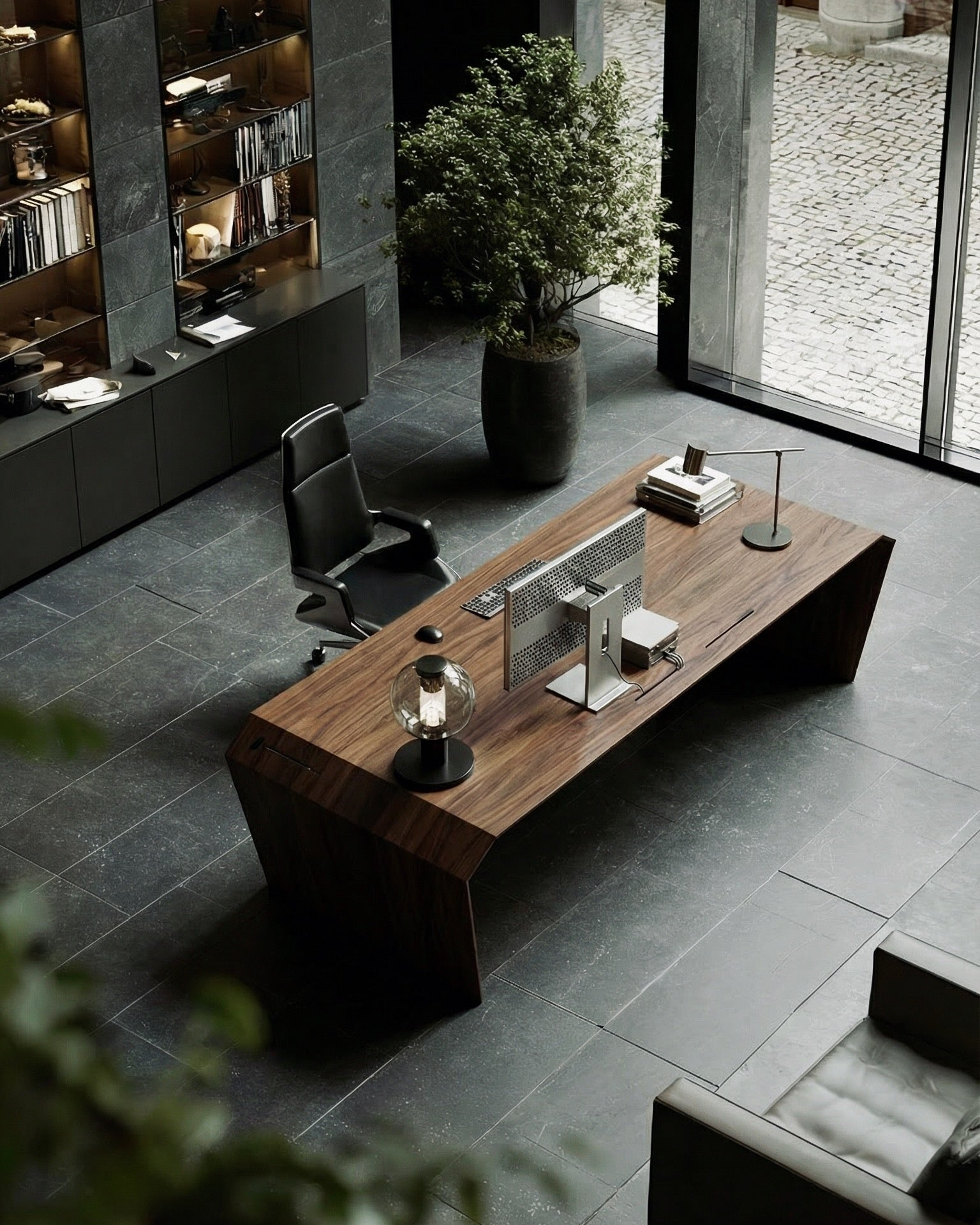
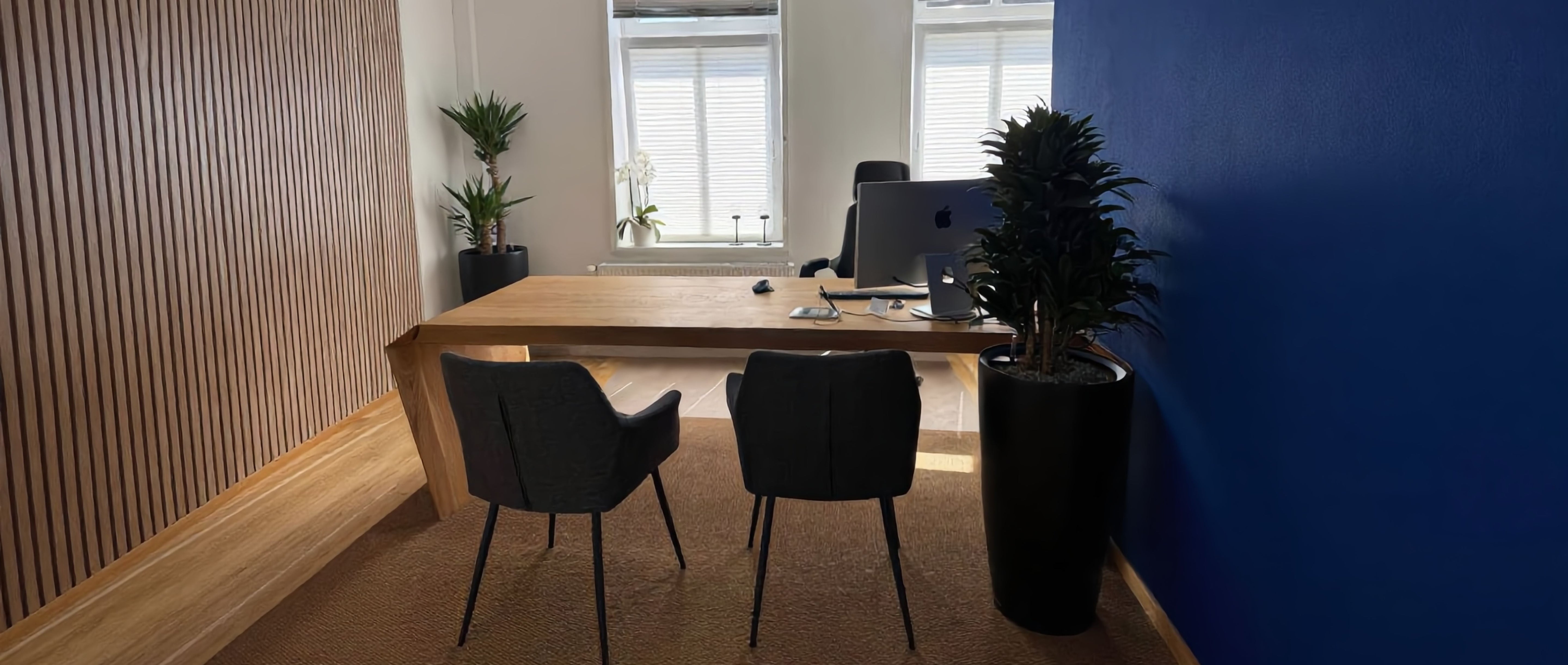
How do you set up a desk with presence for client meetings, one where those meetings take place every day and far-reaching decisions are prepared? Daniel Lehmann works in financial services and regularly advises clients face to face. His brief was clear: a desk in solid oak that looks professional, radiates calm and is planned so that clients can take a seat at it. The result is a set-up with a DeskPRO in the office and a DeskPURE in the home office. The LoungePURE coffee table joins them, all in Golden Timber for a warm, welcoming look.

At a glance
|
Context
|
The solution
|
|
The result
A set-up that gives consultations structure and feels calm in the room. Clients notice the quality of the desk and remember it. For Daniel it creates consistency between office and home office: the same quality of material, the same presence in the room. |
|
Details and the effect in the room


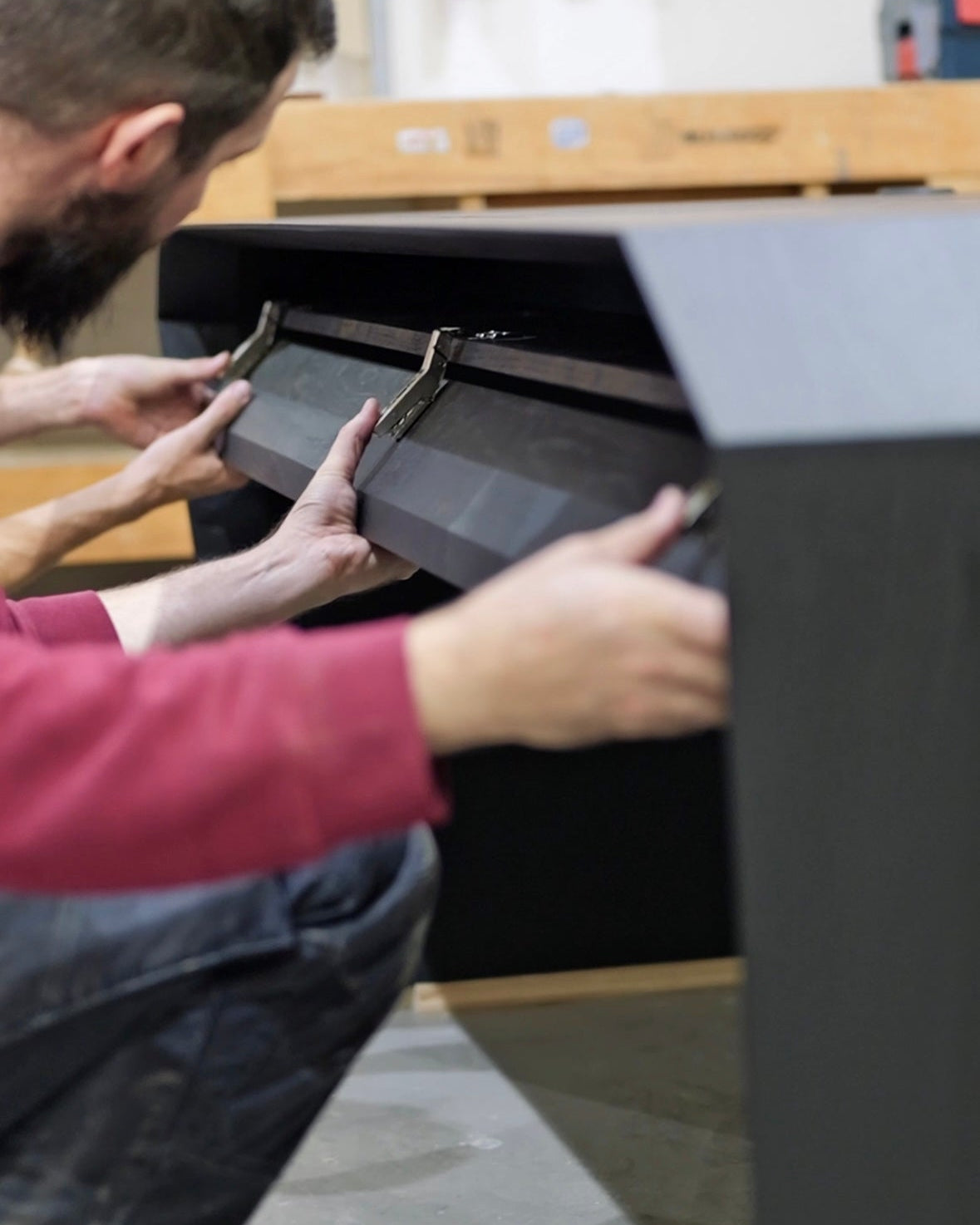
Views of the effect in the room. The final photos of the office, home office and living area will follow.
Working life in financial sales: advice, trust, discretion
In financial services, a desk is rarely just a work surface. It’s where you advise, where the paperwork lives and where the conversation happens, all in one. Clients don’t perch at the desk for a moment. They stay, for structured conversations, questions and decisions. For that, the furniture has to do two things at once: keep things organised and bring a professional calm to the room.
Daniel’s brief was specific: the desk should be positioned and proportioned so that a client can sit at it without technology, cables or clutter shaping the conversation. At the same time, the top should have enough room for paperwork, laptop and monitor without turning into a place where things pile up.


The decision: finding quality that stands up to client meetings
Daniel searched and compared for a long time. Many desks look well made online but turn out to be chipboard, veneer or simply not built to last. For daily client contact that wasn’t an option. He wanted real wood, a material you can feel, and a solution that suits the room and the region.
With an investment like this, price wasn’t the only thing that counted for him. So did how long the desk would last and how it would work, day after day, over many years.
What settled it was personal contact and a transparent process. Changes were agreed directly, and he could always see where production stood. An online decision became a process he could plan around.
The requirements before buying: seating position, technology, the consultation itself
Daniel’s most important requirement was the seating arrangement: clients should sit at the desk without technology coming between them and the conversation. That is why the cable cut-out sits far to the left, so that the monitor and connections stay where they’re needed while the client’s side looks clear.
The usual questions come up in planning: are the proportions right? Is there enough surface for paperwork? Does it work with two people at the desk? Clarity comes when you settle how the desk will be used first, and the dimensions and details after that.


The solution as a system: material, geometry, calm
The set-up is conceived as a system: solid oak as a calm base, clean lines and a geometry that makes room for a consultation. The cable zone is placed so that the technology disappears and the client’s side stays clear. That keeps the surface calm, even with a laptop, a monitor and paperwork on it.
Consistency between office and home office mattered. Daniel wanted the same quality at home as at work. The DeskPRO in the office and the DeskPURE in the home office provide that continuity: the same family of materials, the same calm, each in a form that suits its room.
Golden Timber in oak brings warmth rather than hardness. In a conversation it feels welcoming without feeling domestic.
The effect day to day: presence in the room, focus in the conversation
Daniel describes the effect plainly: the desk is solid, well made and has presence in the room straight away. Clients mention it and remember it. In a setting where trust, professionalism and clarity count, that is part of the client experience.
A calm desk for client meetings reduces distraction. When the cables stay out of sight and the surface doesn’t look like a tech set-up, the conversation stays in the foreground. Solid oak changes how work feels, through its smell and its touch as well.
At home the logic stays the same. The DeskPURE doesn’t feel improvised. It carries the quality over into the home office. The LoungePURE continues the same material in the living area.


Who does this set-up suit best?
This set-up suits working situations where client contact, advice and investment decisions are part of the routine and the desk is part of how you’re perceived. It’s an obvious fit for wealth advisers, private banking, fund managers, investment advisers, financial sales, and advisory teams with a discerning clientele.
Beyond finance, it’s relevant for law firms, tax advisers, architects and agencies. It works anywhere conversations take place at the desk and the office furniture conveys professionalism without being loud. If you work at your desk every day and will use it for years, treat the decision as a long-term investment.
The blueprint: seven principles for a desk in financial advice
If you’re planning a desk where client conversations take place every day, you aren’t deciding on furniture. You’re deciding on the impression you make. Seven principles that make the difference:
- Material before looks. In a client conversation, solid oak or walnut comes across differently from veneer or laminated board, because people can touch it, test it and take it in. In a consultation, that is a signal of quality without a word being said.
- Seating arrangement before design. First settle who sits where: just you, you and one client, you and two. That determines the depth of the top (at least 100 cm if you advise at the desk) and the position of the monitor and technology.
- Cables disappear, they don’t intrude. Built-in cable management such as CableHIDE or CableSLOT gives monitor, dock and power a defined route, and the top stays clear for paperwork and conversation.
- One wood, one system. Furnish office and home office in the same wood, for example the DeskPRO in the office and the DeskPURE in the home office. That creates consistency in how you present yourself, how you’re perceived and how you’re remembered.
- Treat the other pieces as part of the system. A StudioPURE sideboard or a LoungePURE coffee table in the same wood extends the consultation setting without breaking it up.
- Restraint is a decision. No drawers, no units on top, no decoration. A desk for client meetings thrives on surface and stillness, not on features.
- Plan the room, not the desk. The effect comes from the distance to the wall, the lighting and the sightlines. A good desk works because of the room, not in spite of it.
FAQ: a desk for client meetings in financial services
Which desk shape works for consultations with clients?
Why solid oak or walnut rather than veneer or laminated board for a client-facing desk?
How do I get cable management right, so that monitor, dock and chargers don’t look like a “tech corner”?
What size of desk suits client meetings, with clients sitting opposite?
Which wood looks particularly professional in a consultation setting?
Is a second, smaller desk for the home office worth it?
Would you like a set-up like this?
We’ll talk your project through with you personally, or you go straight to the model that fits.

Philipp Strobel is a qualified automotive engineer. He brings an engineer’s way of thinking to running a business, and develops desks in which function and design come out of one system. He has been developing products in wood since 2017, and since 2024, with EDELHOLZ, desks for business owners. The result: well-considered desks with clean lines, built-in technology and function you notice every working day.


